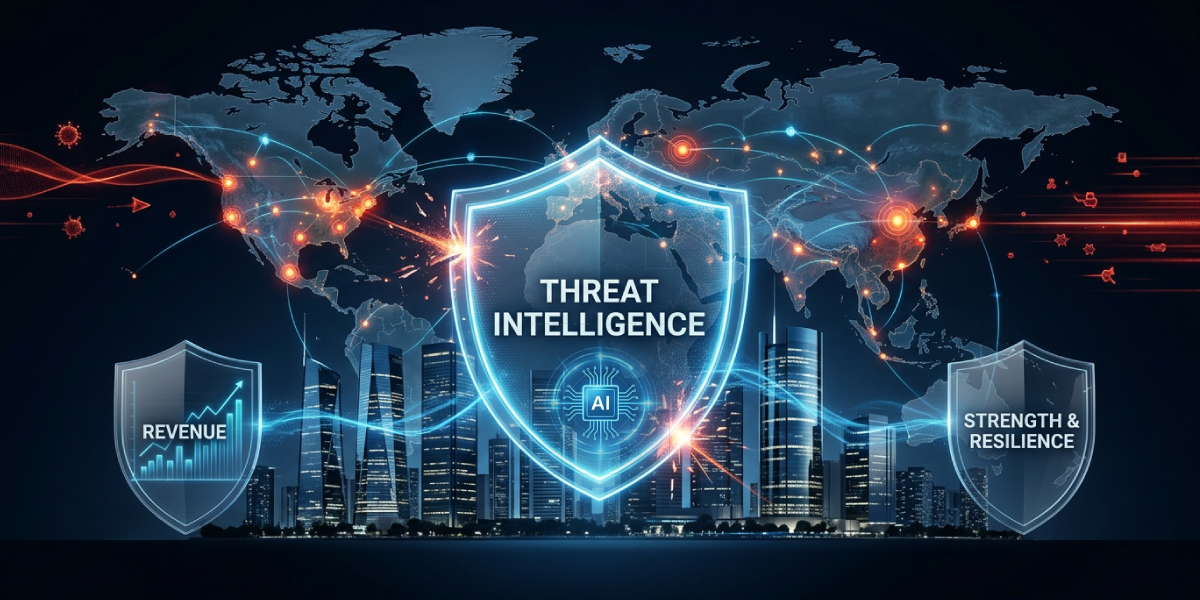
Threat intelligence is more than a tool for security teams. It’s a strategic capability that protects revenue, ensures operational continuity, and enables smarter decision-making across the organization. For too long, it has been treated as a technical function owned by IT. That view is outdated. When used effectively, threat intelligence provides the context needed to spot risks early, act decisively, and align security with business priorities.
The challenge? Many organizations still fail to unlock their full potential. They collect data, track alerts, and monitor threats, but struggle to translate that information into actionable insights that drive resilience and continuity. Cyber risk doesn’t just disrupt systems. It impacts workflows, supplier relationships, and financial performance. When threat intelligence is properly contextualized, it becomes a business enabler, helping organizations respond faster, operate with clarity, and stay ahead of evolving threats.
Redefining Threat Intelligence for Smarter Decisions
From Alerts to Strategic Foresight
Threat intelligence isn’t just a stream of alerts or raw telemetry. Its true value lies in context. It answers critical questions:
- What does this Threat mean?
- Who does it target?
- What action matters most?
This shift transforms security from a reactive function into a proactive, strategic asset.
For example, instead of merely flagging a phishing campaign, high-quality threat intelligence can reveal the attacker’s intent, likely targets, and potential business impact. This enables teams to prioritize resources, reduce risk, and make faster, better-informed decisions. It’s not about chasing every alert. It’s about understanding the bigger picture and acting on what matters most.
Read More: 2025 Global Cybersecurity Review
The Limitations of Raw Telemetry
Raw telemetry, while foundational, is inherently limited. It shows what’s happening within a specific network but lacks the broader context of who is attacking, why, and how it fits into a global campaign. Indicators of Compromise (IOCs) expire quickly, leaving organizations vulnerable to evolving tactics.
True threat intelligence goes beyond IOCs to map adversary behaviors (TTPs), providing a deeper understanding of attack mechanics. When packaged in standardized formats such as STIX/TAXII, it integrates seamlessly with security systems, enabling automated defenses and proactive threat suppression. This shift from isolated data to contextual intelligence is what turns noise into actionable foresight.
Translating Cyber Risk into Business Impact
The Cost of Blind Spots
When threat intelligence is ignored or underutilized, risks don’t stay contained in the SOC. They manifest as missed shipments, stalled operations, and financial losses that hit the bottom line. A ransomware attack can freeze a supply chain overnight. A leaked piece of sensitive information can lead to regulatory penalties and eroded trust.
These aren’t edge cases. They’re the predictable outcomes of seeing threats too late or lacking the context to respond effectively. By connecting threat intelligence to measurable business outcomes, organizations can shift from reactive firefighting to proactive risk management.
Read More: The Human Firewall: Why Cybersecurity Training For Employees Is Your Best Defense
Metrics That Matter
Operational teams don’t need endless lists of alerts. They need clear metrics that show what changed, what was prevented, and where attention is needed next. Key measures include response-time trends, high-severity incidents avoided, and financial exposure associated with specific threats. When these metrics are easy to understand, teams can align faster, justify resource decisions, and demonstrate how threat intelligence supports business resilience.
Threat Intelligence as a Business Enabler
Why Threat Intelligence is Critical for Enterprises
For large, mature organizations, the challenge is not a lack of data, but a surplus of noise and the complexity of their attack surface.
- Strategic Risk Management and Board Reporting: Enterprise C-suites need intelligence that translates technical threats into business risk. Strategic TI helps executives understand geopolitical shifts, adversary motivations, and industry-specific targeting to justify security budgets and resource allocation.
- Automated Defense at Scale: Enterprises process billions of security events daily. Actionable, time-bound TI feeds into orchestration tools (SOAR), allowing automated playbooks to quarantine affected systems, deploy countermeasures, or block malicious infrastructure across multi-cloud environments.
- Proactive Threat Hunting: Armed with deep-dive intelligence on advanced persistent threats (APTs), enterprise SOCs can proactively hunt for dormant threats within their networks, identifying vulnerabilities before breaches occur.
- Supply Chain and M&A Visibility: Enterprises are heavily targeted through third-party vendors. Intelligence ecosystems provide visibility into risk profiles, enabling vulnerabilities to be identified before integration into the primary network.
Read More: Beyond Basic Protection: Your Complete Guide To Cybersecurity Assessment Types
Operationalizing Threat Intelligence Across the Organization
Creating Actionable Briefings
For threat intelligence to drive action, it must be accessible and actionable. The most effective briefings are concise and focused, answering three key questions:
- What are the top threats?
- What’s at stake financially?
- What actions should teams take?
This format ensures that intelligence isn’t just understood; it’s also applied. It’s acted upon, driving meaningful outcomes across the organization.
Integrating Intelligence into Decision-Making
Threat intelligence should inform decisions across departments, not sit siloed within security teams. It helps prioritize risks, allocate resources effectively, and respond with confidence. For example, IT leaders can use intelligence to decide whether to invest in detection capabilities or employee training, based on actual threat patterns and exposure.
When this context is shared across teams, decision-making becomes sharper, faster, and more aligned with business goals.
Read More: Ten Critical Cyber Security Trends Every Security Expert Must Navigate In 2025
Tailoring Threat Intelligence for Enterprises
Large organizations face the challenge of managing vast amounts of data and complex attack surfaces. Threat intelligence helps by:
- Automating Defense at Scale: Feeding actionable intelligence into SOAR platforms for instant response.
- Proactive Threat Hunting: Identifying dormant threats and zero-day vulnerabilities before breaches occur.
- Supply Chain Visibility: Assessing third-party risks to prevent vulnerabilities from entering the network.
Conclusion: From Reactive to Proactive
Threat intelligence isn’t just about detecting threats. It’s about anticipating them. By moving beyond raw telemetry and embracing context-rich intelligence, organizations can protect revenue, guide strategic decisions, and build resilience.
The shift from data to decisions is what defines modern cybersecurity.
Curious about how threat intelligence can transform your approach to risk? Let’s start the conversation.