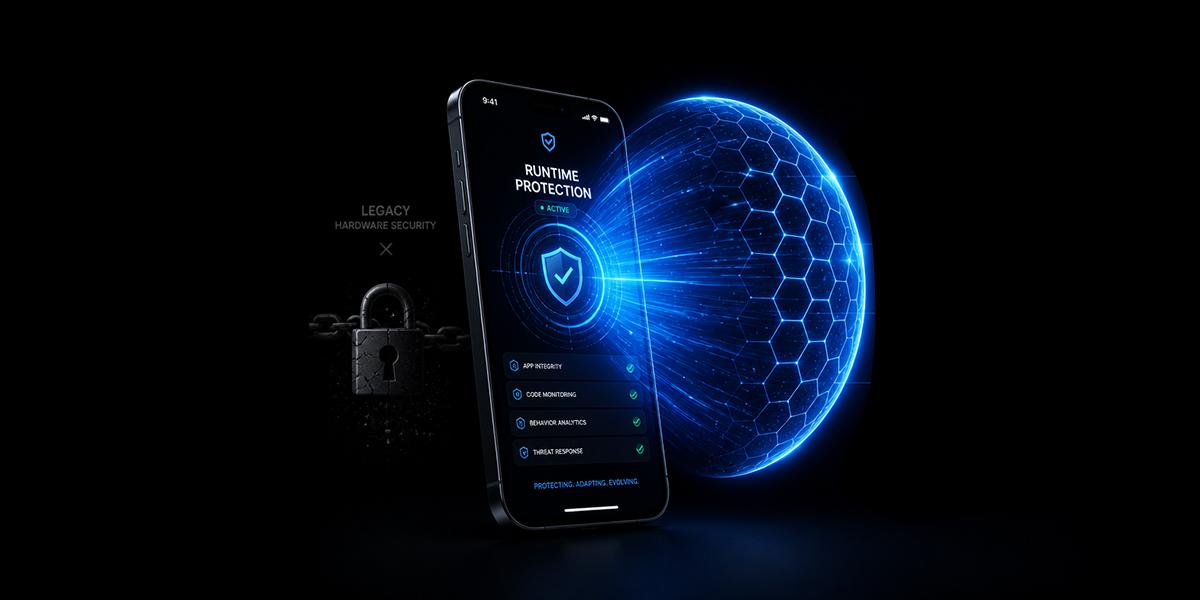
For over a decade, smartphone manufacturers competed fiercely on hardware. Screen refresh rates, battery charging speeds, lens count, and silicon node scales dominated the conversation. Today, hardware innovation is plateauing. Consumers are holding onto their devices longer, and the battlefield has fundamentally shifted. A smartphone is no longer just a collection of high-performance parts. It is the ultimate orchestrator of a user’s digital identity, financial assets, and privacy.
For Original Equipment Manufacturers (OEMs), this shift changes where value is created. Cybersecurity is no longer just an engineering requirement or a defensive investment. The software execution layer, particularly the custom operating system experience, is becoming a powerful driver of customer trust, service differentiation, and long-term revenue growth.
By natively integrating lightweight third-party cybersecurity Software Development Kits (SDKs) into custom OS layers, OEMs can unlock high software margins, capture enterprise procurement markets, and extend the lifecycle of budget devices. Embedding security intelligence directly into the firmware transforms a passive hardware device into an active, context-aware security perimeter.
Unlocking High-Margin Software Services
Hardware margins are notoriously thin. Often dipping below 10% in the highly competitive mid-range and entry-level tiers. Once a device ships, traditional hardware monetization ends. Sustained profitability requires expanding Average Revenue Per User (ARPU) post-sale through software services.
Embedded cybersecurity SDKs offer a frictionless way to convert standard device owners into high-margin subscribers. Natively integrating a hyper-optimized security engine into system settings creates a direct pipeline for recurring revenue. The customer journey evolves from a one-time hardware margin into a recurring revenue stream via premium security upsells.
Read More: How Threat Intelligence Protects Revenue And Strengthens Resilience
White-Labeled Freemium Upsells
Requiring users to find and download a security app introduces friction in customer acquisition. An embedded SDK allows OEMs to offer a seamless, white-labeled freemium model instead. A baseline engine runs silently in the background to check for system anomalies for free, establishing an early standard of device health.
Within the native system interface, users see simple activation prompts for premium tiers. These advanced services include real-time VPNs, identity theft monitoring, secure credential vaults, and parental controls, all branded under the OEM. Because the core engine is already operating within the system architecture, the transition from free scanning to premium protection is instant.
Revenue Sharing and Direct Carrier Billing
Partnering with specialized mobile security vendors eliminates the massive R&D costs needed to build threat intelligence networks. The OEM acts as the distributor. These partnerships can create attractive recurring revenue opportunities while allowing OEMs to expand their software service portfolios without building global threat intelligence operations from scratch.
Furthermore, major telecom carriers frequently mandate rigorous security testing before ranging a device on their networks. An embedded SDK helps OEMs achieve these carrier certifications more quickly while opening doors to Direct Carrier Billing (DCB). Bypassing traditional app store commissions and using DCB maximizes conversion rates. This ecosystem alignment lowers churn and delivers a highly predictable revenue stream that scales with every device shipped.
Accelerating B2B Enterprise Fleet Validation
A few major players have historically dominated the corporate fleet market. IT departments choose hardware based on long-term support and baked-in security. Breaching this B2B procurement layer is difficult for challenger OEMs because corporate Chief Information Security Officers enforce strict validation requirements.
Natively integrating an enterprise-grade Mobile Threat Defense (MTD) SDK breaks down these barriers.
Instant Validation for Corporate IT
Corporate IT needs absolute certainty that procured endpoints will not leak data. Standard downloadable endpoint management tools lack deep system visibility due to application sandboxing.
Embedding security SDKs directly into the custom OS shell, bridging the gap between the application layer and the Hardware Abstraction Layer (HAL), grants OEMs deep visibility into device risk signals without the limitations of standard application sandboxing. The SDK acts as a local node, calculating a real-time Device Risk Score based on memory configurations and application behavior. Secure APIs expose this score to major Mobile Device Management (MDM) platforms. Device risk telemetry can be exposed through enterprise mobility and security management platforms, allowing corporate teams to make faster trust decisions without sacrificing user experience.
Accelerating AER Milestones
Google’s Android Enterprise Recommended (AER) program is the gold standard for B2B mobile procurement. Clearing these hurdles requires advanced cryptographic verification and real-time network protection.
Partnering with an established mobile security provider can significantly accelerate enterprise readiness by introducing proven detection capabilities and operational maturity into the platform. The OEM adopts the vendor’s threat intelligence pedigree, compressing time-to-market for enterprise-ready handsets and enabling sales teams to bid on high-margin corporate deployments with absolute technical credibility.
Enterprise procurement is only one side of the equation. The broader market challenge lies in protecting millions of everyday consumers who may never benefit from premium hardware lifecycles or extended security support commitments.
Read More: Real-Time Threat Detection: Everything You Should Know
Protecting Value-Tier Handsets
Premium flagship devices have the margins to support years of continuous over-the-air (OTA) firmware security patches. However, mid-tier and budget handsets, which account for over 60% of global shipment volumes, lack the unit economics for perpetual R&D. Once a budget phone launches, engineering focus naturally shifts to the next iteration. Millions of active devices experience severe security degradation within a year or two, exposing users to zero-day threats and eroding the brand’s reputation.
Decoupling Security from OTA Cycles
An optimized cybersecurity SDK embedded at the OS shell provides a cost-effective alternative to heavy firmware updates. Operating as an autonomous software layer, the SDK’s threat intelligence and anomaly definitions update dynamically via lightweight cloud syncs. This happens completely independently of a full OS patch. OEMs can guarantee long-term threat defense for budget hardware without inflating engineering overhead or the physical bill of materials cost.
Optimizing Performance
Running legacy desktop-style antivirus software on low-cost devices causes system latency, thermal throttling, and battery drain. Modern embedded mobile SDKs solve this by operating with a micro-footprint, using passive, event-driven hooks instead of brute-force file scanning. Value-tier OEMs can deliver high-grade protection while keeping the hardware snappy and responsive.
Platform Integrity Amid Mandated Sideloading
Global regulations are dismantling closed application monopolies. Mandates like the European Union’s Digital Markets Act (DMA) require mobile operating systems to allow sideloading and third-party app stores. This shatters the traditional security moat. Malicious and unvetted applications will now sit in volatile memory right next to sensitive system settings.
The regulatory shift creates an unexpected opportunity. As traditional app store gatekeeping weakens, OEMs have an opportunity to position their own operating environments as trusted validators of platform integrity.
Native App Store Dominance
Consumers know that downloading from unvetted sources increases the risk of ransomware and financial fraud. Integrating a real-time pre-scanning and reputation SDK into the core OS ingestion framework provides a safety guarantee that third-party marketplaces cannot copy.
When a user attempts to sideload an APK, the embedded SDK intercepts it at the system boundary. It executes localized, instant integrity validation against a global threat database and checks for malicious repackaging. The OS can actively block maliciously repackaged APKs, transforming the OEM’s custom skin from a passive canvas into an active protector, building intense user loyalty.
Safeguarding First-Party Services
OEMs deploy their own ecosystem apps, from native browsers to system utilities. In a sideloading environment, these apps are prime targets for cross-app contamination and API hijacking. Runtime Application Self-Protection (RASP) capabilities integrated into the broader security architecture can significantly reduce this risk. The SDK continuously monitors the execution space, detecting if a rogue app attempts to inject code into system processes. Neutralizing these threats at the platform level keeps high-value digital assets completely secure.
Edge AI and Mitigating Scams
Signature-based detection is obsolete. Generative AI coding assistants allow threat actors to instantly create thousands of malware variants, each with a unique cryptographic signature. Static signatures alone increasingly struggle to keep pace with the volume and diversity of emerging threats. The next era of smartphone security relies entirely on dynamic, behavioral anomaly detection powered by on-device machine learning.
Integrating a behavioral security SDK allows OEMs to maximize the return on their Neural Processing Unit (NPU) hardware investments, translating raw silicon power into a highly visible consumer protection layer.
Intercepting Interface Manipulation
Sophisticated mobile threats no longer rely on traditional file system infection. They abuse native operating system components, such as accessibility APIs and screen overlays. Banking trojans wait for a valid biometric login, then exploit accessibility settings to render a transparent screen layout over the legitimate app. The user thinks they are banking safely, but the malware is logging every keystroke.
Hardware enclaves are not designed to detect these runtime behaviors, while signature-based approaches may struggle to identify highly adaptive attack techniques. An advanced behavioral SDK operates within the live runtime layer, tracking interface changes and flagging irregular cross-app queries. Offering native mitigation against these overlay attacks isolates users from destructive financial fraud.
Privacy-Preserving Phishing Prevention
Phishing and SMS scams (smishing) represent a massive underground economy, responsible for billions in annual global financial losses. Threat actors use advanced language models to generate perfect text alerts and WhatsApp messages. Defending against this traditionally meant uploading message content and URLs to a cloud server for scanning, which introduces severe privacy and regulatory liabilities.
An embedded SDK uses a Privacy-by-Design architecture to analyze threats entirely at the device edge. Compact machine learning models run locally on the NPU, scanning SMS threads and active browser requests offline. No personally identifiable information ever leaves the device. The OS can intercept a malicious link and display a contextual warning instantly. OEMs can advertise a safety shield against social engineering while guaranteeing total data privacy to global regulatory bodies.
Read More: Why Cybersecurity Training For Employees Is Your Best Defense
Frequently Asked Questions
What is an embedded mobile security SDK?
An embedded mobile security SDK is a lightweight software component integrated into a device’s operating environment or application ecosystem. It provides runtime visibility, threat detection, risk scoring, and behavioral monitoring that complement traditional operating system security controls.
Why are secure enclaves not enough on their own?
Secure enclaves protect cryptographic keys, biometric credentials, and hardware trust functions. They are not designed to monitor active application behavior, runtime memory manipulation, accessibility abuse, overlay attacks, or other threats that occur after an application begins executing.
How does runtime protection differ from device security?
Device security focuses on protecting the hardware platform and the integrity of the operating system. Runtime protection focuses on safeguarding applications and user interactions while software is actively running, helping detect threats within the execution environment.
Strategic Summary: The Price of Delay
Increasingly, consumers and enterprises are choosing ecosystems they trust rather than comparing hardware specifications alone. With hardware engineering reaching near-parity, the software execution strategy will dictate long-term financial viability.
Relying on generic, built-in OS security is an increasingly risky bet. Baseline frameworks are constrained by broad ecosystem permissions and slow update cycles, preventing them from adapting to rapid zero-day scams. Integrating specialized cybersecurity SDKs directly into the custom OS shell is a high-yield opportunity that solves this problem.
It allows manufacturers to rewrite their financial relationship with consumers, turning a one-time hardware sale into a continuous software revenue engine. It opens up profitable enterprise procurement channels, extends the lifecycle of budget devices without inflating production costs, and deploys intelligent, privacy-preserving defenses against advanced runtime threats. Manufacturers that strengthen runtime protection early will be better positioned to build customer trust, differentiate their platforms, and expand recurring software revenue opportunities. Those that delay may find that hardware innovation alone is no longer enough to sustain loyalty in a market increasingly shaped by security expectations.